
Introduction
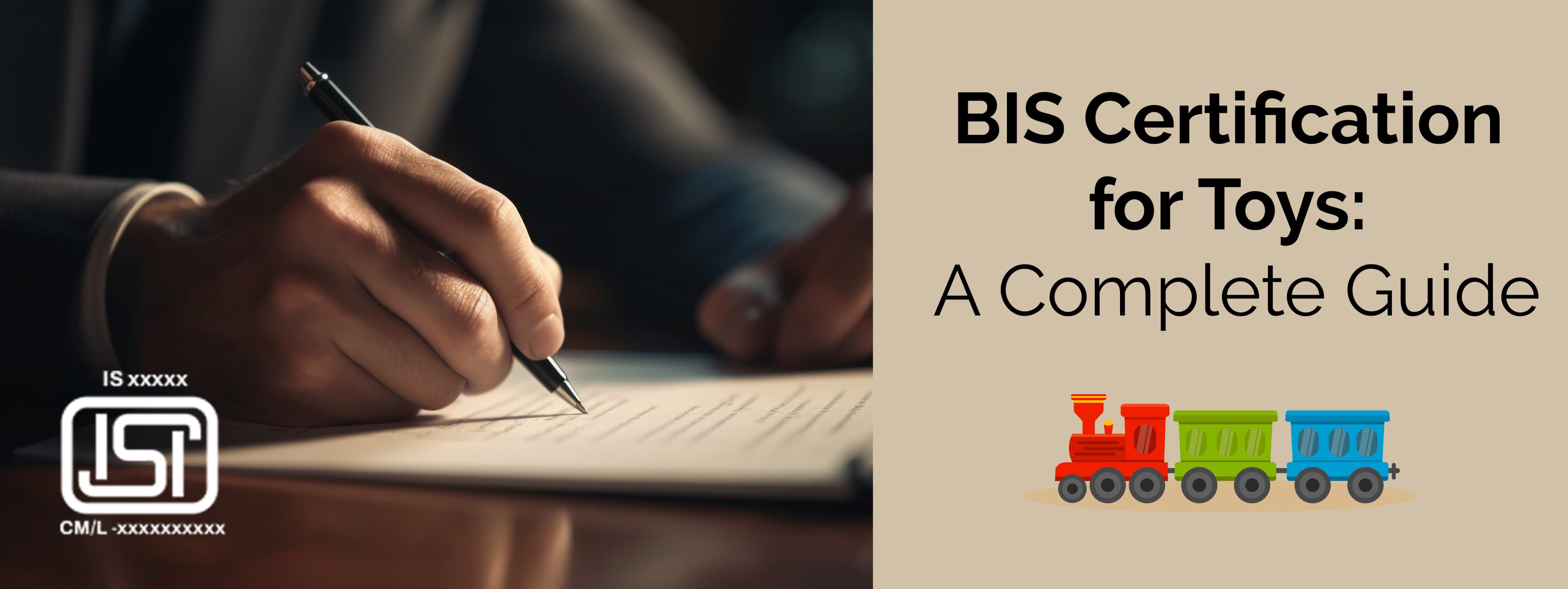
Toys are products that are used by children for learning, entertainment, creativity, and development. Since toys are directly used by children, their mechanical, physical, chemical, as well as electrical safety is an important regulatory concern in India.
BIS certification is absolutely mandatory for toys covered under the Toys (Quality Control) Order, 2020. The order basically requires notified toys to conform to the applicable Indian Standards and bear the BIS Standard Mark under the prescribed certification framework. The applicable requirements differ depending on whether the product is an electric or non-electric toy.
For manufacturers, importers, as well as businesses who are planning to sell toys in India, understanding the applicable standard, testing requirements, BIS licence process and current regulatory updates is absolutely essential.
What Is BIS Certification for Toys?
BIS certification for toys is a mandatory product certification requirement under the Toys (Quality Control) Order, 2020 for toys that have been notified by the order. Not conforming to the BIS requirements can lead to risks such as market penalties and fines. Under the QCO, covered toys must conform to the corresponding Indian Standards and bear the BIS Standard Mark under Scheme-I, subject to the applicable requirements. The BIS certification framework is basically intended to make sure that toys supplied in the Indian market meet prescribed safety requirements, to be reliable for safer use.
Is BIS Certification Mandatory for Toys in India?
Yes, it is absolutely a mandatory requirement for the Indian market. BIS certification is compulsory, which means manufacturers and businesses should determine BIS applicability before manufacturing for the Indian market, importing, or placing toys on sale. If the notified toys are not certified by the BIS in India, they may be restricted for sale and smooth trade. BIS ensures safety as well as quality for notified products, so that they can be relied upon for long-term use.
Which Products Are Considered Toys under BIS Certification?
The toy regulatory framework covers several products that have been designed or clearly intended for use in play by children. Depending on their design as well as intended use, products can include the following:
- Dolls and soft toys
- Rattles and infant toys
- Puzzles
- Building and construction toys
- Educational toys
- Activity toys
- Ride-on toys
- Outdoor toys
- Swings and slides
- Toy vehicles
- Musical toys
- Electric and battery-operated toys
- Finger paints
- Other products intended for children's play
However, toy classification should not be based only on the product's commercial name. The intended use, design, functionality, as well as applicable standards should be evaluated to determine the correct regulatory route. Check your product eligibility for BIS certification to know whether they need the mandatory ISI mark license in the Indian market or not.
BIS Standards for Electric and Non-Electric Toys
For BIS certification purposes, toys are broadly classified into non-electric toys and electric toys.
| Toy category | Primary BIS standard |
| Non-electric toys | IS 9873 (Part 1) |
| Electric toys | IS 15644:2006 |
BIS specifies that a manufacturer selects the applicable primary standard based on the type of toy. If both electric and non-electric toy categories are involved, separate applications are required for the respective types, and separate BIS licenses will be granted by the official authority.
What Does the BIS IS 9873 Series Cover for Toys?
The IS 9873 series addresses different safety aspects of toys. Important parts for this IS series generally include:
| Standard | Main safety area |
| IS 9873 Part 1 | Mechanical and physical properties |
| IS 9873 Part 2 | Flammability |
| IS 9873 Part 3 | Migration of certain elements |
| IS 9873 Part 4 | Swings, slides and similar activity toys |
| IS 9873 Part 7 | Finger paints |
| IS 9873 Part 9 | Certain phthalate esters |
BIS's current compulsory-certification listing identifies these standards for non-electric toys. It is important to note that not every part applies to every toy. The applicable secondary requirements will depend on the toy's construction, materials, features, as well as its intended use.
What Is IS 15644 for Electric Toys?
IS 15644:2006 is the applicable Indian Standard for Safety of Electric Toys that have been listed by BIS under the Toys (Quality Control) Order. Electric toys are products having functions that depend on electricity within the scope of the standard. These may include certain battery-operated or mains-powered toys. For electric toys, compliance may involve requirements that are usually related to electrical safety and other applicable toy-safety requirements.
A toy should therefore not be classified as “electric” merely because it contains a battery or electronic component. The actual functionality and scope of the applicable standard should be checked before getting the BIS ISI certification.
What Safety Requirements Are Tested for BIS Toy Certification?
Toy testing is not limited to checking the physical appearance of a product. Depending on the toy as well as the applicable standards, testing can cover several safety parameters, which may include:
- Mechanical and physical safety
- Reasonably foreseeable abuse
- Flammability
- Migration of certain elements
- Phthalate restrictions
- Safety of swings, slides and similar activity toys
- Finger-paint requirements
- Electrical safety for electric toys
- Material-related requirements
- Construction and component safety
Brand Liaison, the best BIS ISI certification consultant in India, can help businesses determine the exact testing requirements to get a BIS license for toys, in a hassle-free manner.
Who Needs BIS Certification for Toys?
BIS certification is primarily relevant to the manufacturer of the toy.
A BIS licence to use or apply the Standard Mark is granted to the actual manufacturer under the applicable Scheme-I framework; and a business involved only in marketing or distribution cannot obtain the manufacturer’s BIS licence in its own name. Here are business entities that can get a BIS licence for toys:
Indian Toy Manufacturers
Indian manufacturers who are producing toys for the domestic market need to obtain the applicable BIS licence before supplying notified toys in India.
Foreign Toy Manufacturers
Foreign manufacturers who are exporting the notified toys to India must follow the applicable BIS certification procedure for foreign manufacturers, generally through the Foreign Manufacturers Certification Scheme (FMCS).
Importers of Toys
Importers should verify the BIS status of the foreign manufacturer and product before arranging commercial sales and imports in the Indian market. An importer should not assume that an overseas safety certificate automatically replaces Indian BIS requirements. Also, the importer cannot get a BIS license; instead can request a copy of the same from the manufacturer.
Documents Required for BIS Certification of Toys
The exact documents for a BIS certification generally depend on the toy category, manufacturing facility, as well as certification requirements. Common documentation may include:
- Legal address proofs of the factories
- Product specification
- Details of raw material, machinery, and testing equipments
- Details of QC Staff and other basic details of the factory
- Lab test reports of the product
- Main Application Form V
- ISI Application Fee
- Appointment of AIR (Authorized Indian Representative) in case you are a foreign manufacturer
Note: You can appoint Brand Liaison as your AIR.
Step-by-step BIS Certification Process for Toys in India
The BIS certification process in India generally involves the following steps to be followed by businesses:
Step 1: Identify the Toy Category
Determine whether the product is a non-electric or electric toy and establish the applicable Indian standards.
Step 2: Review the Applicable BIS Requirements
Check the current Toys QCO, applicable Indian Standards, amendments, product manual as well as BIS certification requirements to comply with the same and get the certificate on time.
Step 3: Prepare the Product and Factory
Make sure that the manufacturing facility, production process, quality-control arrangements as well as testing facilities are suitable for the applicable BIS requirements.
Step 4: Product Testing
Submit product samples for testing against the applicable standards and safety requirements to ensure conformance with the IS specifications.
Step 5: BIS Application
Submit the BIS application with the required technical, legal, as well as all manufacturing documents.
Step 6: Factory Evaluation
BIS may evaluate and inspect the manufacturing facility, quality-control arrangements, as well as testing capabilities, as part of the certification process.
Step 7: Address Observations
Any queries or mismatches that are identified by the BIS officials during testing or factory assessment need to be addressed before the certification can proceed.
Step 8: Grant of BIS Licence
After reviewing all the applicable requirements, BIS grants the licence permitting the manufacturer to use the Standard Mark for the notified products.
Understanding BIS Certification for Imported Toys
Imported toys that have been notified by the Toys QCO need to meet the applicable BIS requirements before being supplied in India, unless a specific regulatory provision or exemption applies to them. Importers should check the following before placing an order for toys for sale in India:
- Is the product legally classified as a toy?
- Is it electric or non-electric?
- Which Indian Standard applies to the toys?
- Which Indian standards apply?
- Does the foreign manufacturer have the required BIS certification?
- Does the product match the certified specifications?
- Are the required markings and documents in place?
- Are there any current exemptions or special provisions?
Checking these requirements before shipment can help avoid customs, supply-chain, as well as market-compliance problems in the Indian market for importers.
What are the Common BIS Compliance Issues for Toy Businesses?
Toy manufacturers as well as importers may face compliance problems when the product is checked only from a commercial or design perspective. Common issues faced during BIS compliance generally include:
- Incorrect classification of toys.
- Selecting the wrong Indian standard.
- Using outdated test reports for compliance.
- Differences between tested samples as well as commercial production.
- Incomplete product documentation.
- Non-compliant materials or components.
- Inadequate testing arrangements.
- Incorrect BIS marking.
- Importing products before completing applicable certification.
- Failing to check current amendments as well as transition provisions.
Taking help from Brand Liaison, the expert BIS Certification consultants in Delhi, India, can help businesses prevent these common BIS compliance issues and gain a BIS ISI mark license for toys to smoothly function in the Indian market.
How Brand Liaison Helps with BIS Certification for Toys in India?
Brand Liaison helps toy manufacturers, importers, as well as businesses with BIS compliance for products that are entering the Indian market. Our team assists with BIS applicability, applicable IS standards, product testing, documentation, certification applications, and comprehensive regulatory compliance.
With 10+ years of experience in Indian product compliance, Brand Liaison provides practical and absolutely end-to-end support for businesses looking to manufacture, import, or sell compliant toys in India. Here is why businesses prefer to work with Brand Liaison:
- Cost-effective solutions for compliance management
- Practical guidance
- Technical assistance
- Documentation support
- Lab testing coordination
- Comprehensive compliance consultancy
- Expertise in industry and regulatory requirements
- Dedicated compliance guidebooks
- Free eligibility check for Indian market product certifications
- AIR support for foreign manufacturers
- Post-certification assistance for ongoing compliance
Connect with Brand Liaison today to ensure worry-free BIS compliance for the Indian market. Get complete assistance for application filing and grant of BIS license, and function smoothly in India.
Conclusion
BIS certification is surely an important compliance requirement for manufacturers as well as businesses supplying notified toys in India. For manufacturers and importers, the best approach is to identify the correct toy category, determine the applicable standards, complete the required testing and documentation, and obtain the necessary BIS approval before commercial supply in India.
With proper compliance planning, businesses can prepare their toys for the Indian market while reducing the risk of testing issues, documentation gaps, and regulatory delays. Expert consultants and top BIS certification agents like Brand Liaison can ease the process for BIS compliance in the Indian market.






Share Your Views
Add a Comment