
Overview
Extended Producer Responsibility (EPR) has become one of the mandatory compliance requirements for businesses that import or sell products generating waste in India. Whether it is electronic, plastic, battery-based, oil-based, or tyre-related, Indian laws have stipulated that companies should be accountable for the environmentally safe collection, recycling, and disposal of waste that they produce during their product manufacturing.
To meet these obligations, businesses must obtain an EPR certificate, issued by the Central Pollution Control Board (CPCB) or State Pollution Control Boards, depending on the waste type. This blog provides a comprehensive overview of what EPR certification is, who needs it, the categories covered under EPR Registration in India, and how compliance partners like Brand Liaison help businesses manage seamless registrations.
What is an EPR Certificate?
An EPR certificate in India is a mandatory certification that ensures businesses take environmental responsibility for waste generated from their products. It also confirms that the producers, importers, and brand owners are responsible for the collection, recycling, or environmentally friendly disposal of generated waste.
This certificate is issued upon assessment of the EPR plan, business operations, and recycling facilities of the company. It also creates several annual targets that companies have to achieve by using verified recyclers. Brand Liaison helps manufacturers, brand owners, and importers to manage the certification of e-waste, plastic waste, battery waste, used oil, and used tyres through complete EPR compliance solutions.
Who Needs EPR Registration for the Indian Market?
EPR registration in India is a must for a large number of businesses in manufacturing, importing, packaging, and distribution.
You need an EPR registration certificate if you are:
| Business Type | EPR Required? | Examples |
| Producers | Yes | Electronics, Batteries, Plastic Packaging, Oil, and Tyre Manufacturers |
| Importers | Yes | Importers of Electronic Goods, Oil. Packaged Plastic Products, Batteries and Tyres |
| Brand Owners | Yes | Brand Owners selling products under their own brand name |
| Recyclers | Yes | Authorized Recycling Facilities |
| Waste Collectors | Yes | E-Waste, plastic Waste, battery waste, oil waste, and tyre waste Processing Units |
It is mandatory for the producers, brand owners, and importers (PIBOs) to get the EPR registration before they sell or import the products in the Indian market.
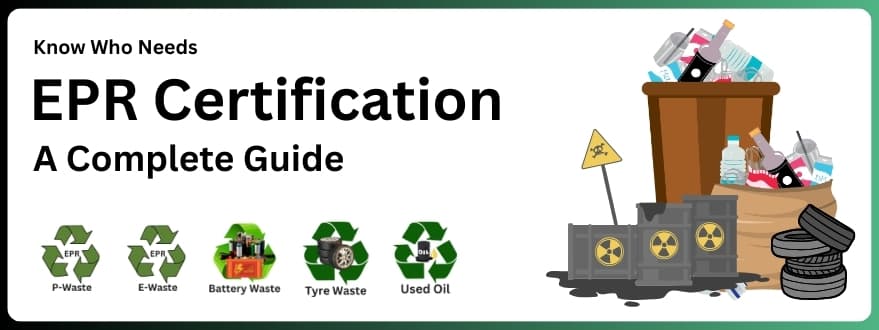
Different Types of EPR Registration in India
India has EPR requirements for a variety of waste. Here is a clear explanation of the major sectors requiring an EPR registration certificate:
- EPR Registration for Electronics (E-Waste)
EPR registration for e-waste is applicable to electrical and electronic equipment manufacturers, importers, and brand owners. Under EPR in E-waste management, producers must ensure the collection, recycling, and proper disposal of electronic waste after the end of their life through authorized recyclers.
- EPR Registration for Batteries (Battery-Waste)
Importers and producers of batteries must handle waste batteries adequately. EPR Certification for battery focuses on proper collection, recycling obligations, and reporting to CPCB through the centralized portal.
- EPR Registration for Plastics (P-Waste)
The manufacturers, importers, or brand owners of plastic packaging should adhere to standards for EPR Registration for Plastic Waste for collecting, processing, and recycling plastic. This is a highly regulated category because it has an environmental impact and is subject to high levels of scrutiny with regard to compliance.
- EPR Registration for Used Tyres
For EPR Registration for Used Tyres, manufacturers and importers of tyre brands shall apply for environmentally friendly recycling or end disposal of tyre waste generated via registered recyclers.
- EPR Registration for Used Oil
For the EPR Registration for Used Oil, the manufacturers and importers of lubricating oils must dispose of used oil waste products by making sure that they are collected and recycled using the authorized means which is as per the national waste management.
To get complete guidance for EPR registration in India, download the free guidebook from here.
Benefits of EPR Registration in India
Obtaining an EPR certificate has several benefits:
- Ensures full EPR compliance with Indian waste management regulations
- Allows smooth sales and imports in India
- Minimises legal risks, fines, and business interruptions
- Reduces product bans and product seizures
- Favours well-organised and open waste management systems
With rising regulatory enforcement, EPR registration is no longer optional but essential for long-term business continuity.
Why Companies Must Take EPR Seriously
Failure to comply with EPR regulations can result in:
- Heavy penalties
- Product bans
- Import and customs blockage
- Business license cancellation
- Legal notices from CPCB or SPCBs
Compliance ensures environmental safety, brand credibility, and long-term sustainability.
Key Challenges in EPR Compliance
Many businesses may face difficulties while obtaining EPR compliance for the Indian market.
Some of the common challenges include:
- Understanding changing EPR regulations
- Identifying applicable EPR categories
- Meeting recycling targets
- Managing documentation requirements
- Coordinating with authorized recyclers
- Filing periodic reports
So, it is important to hire an EPR Consultant for smooth compliance in India. It is because professional guidance can help businesses navigate these challenges effectively.
How does Brand Liaison support EPR Registration in India?
Brand Liaison is one of India’s leading compliance consultants, providing end-to-end assistance in obtaining EPR certificates across all categories: e-waste, plastic waste, battery waste, used oil, and used tyre waste.
Being the best EPR Certification consultant in India, our services include:
- Product Eligibility Assessment through the free CYE tool
- Assistance in Paperwork
- Applying for the application.
- Drafting EPR plans
- Coordination with CPCB or SPCBs.
- PRO and recycler tie-ups
- Annual compliance reporting.
- Expert consultancy on how to get EPR registration in India.
When the experts are involved, companies can acquire quicker approvals and be fully compliant with the regulatory requirements without delays in their functioning.
Conclusion
Businesses that are involved in the selling and importing of electronics, plastic products, batteries, oil, or tyres in India no longer have a choice on whether to implement EPR certification or not.
With multiple waste categories under the EPR framework, companies must take proactive steps to obtain their EPR registration certificate, manage waste responsibly, and meet recycling targets. Be it electronic garbage, plastic packaging, batteries, used oil, or used tyres, EPR provides a cleaner environment and, in addition, creates accountability in the industry.
With professional support from a compliance expert, Brand Liaison, the process becomes seamless, reliable, and fully compliant with Indian regulations. Connect with Brand Liaison today.









Share Your Views
Add a Comment