
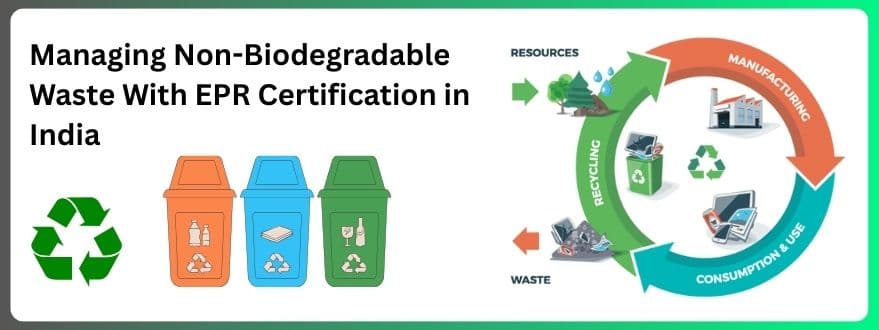
Overview
Rapid urbanisation, industrial growth, and changing consumption patterns have led to a massive rise in non-biodegradable waste around the world. This waste does not decompose naturally and, instead of decomposing, pollutes land, water, and air over decades.
To manage this issue effectively, EPR Registration is mandatory. So, it is important to understand what non-biodegradable waste is and how it differs from biodegradable materials. EPR compliance requirements to manage the same, and how experts like Brand Liaison, a leading EPR Consultant in India, support companies in meeting compliance requirements.
What is Non-Biodegradable Waste?
Non-biodegradable waste is a type of waste that cannot be broken down naturally by the use of microorganisms like bacteria or fungi. These non-biodegradable substances remain in the environment for extremely long periods, sometimes hundreds of years, causing long-term pollution.
Most non-biodegradable pollutants come from synthetic, chemical-based, and industrial products. They accumulate in landfills, pollute the soil and oceans, and destroy the ecosystem.
Examples of Non-Biodegradable Wastes
Some of the most common non-biodegradable waste examples include:
- Packaging materials, bottles, plastic bags.
- Metal products such as aluminium cans and steel.
- Bottles and containers made out of glass.
- Batteries of all types
- Used oil and used tyres
- Styrofoam and thermocol
- Electrical and electronic equipment
- Rubber and synthetic fibers
- Paintings and pesticides that are based on chemicals.
These non-biodegradable substances do not break down and are major contributors to global environmental pollution.
Difference between Non-Biodegradable and Biodegradable Waste
Below is the difference between biodegradable and non-biodegradable waste:
| Aspect | Biodegradable | Non-Biodegradable |
| Decomposition | Breaks down naturally | Does not decompose naturally |
| Time Required | Weeks to months | Decades to centuries |
| Examples | Food waste, paper | Plastics, metals, glass |
| Environmental Impact | Eco-friendly | Causes long-term pollution |
What is an EPR Certificate?
EPR Certificate is a mandatory certification that allows producers, importers, and brand owners (PIBOs) to properly collect, recycle, and dispose of the waste generated after the end of the lifecycle of a product. It is issued by the Central Pollution Control Board (CPCB) or the respective authorities after successful registration and approval.
EPR Certificate is a compulsory certification provided in accordance with Indian waste management to ensure responsible management of post-consumer waste, including electronics, plastics, tyres, oil or batteries. The full form of EPR Certificate is Extended Producer Responsibility Certificate, derived from the principle of extended producer responsibility (EPR), which makes producers accountable for the end-of-life management of their products. Understanding the importance of EPR certification in detail is thus absolutely essential for businesses selling or importing notified products in India.
Importance of EPR Certificate to manage Non-Biodegradable Waste
Extended Producer Responsibility (EPR) plays a crucial role in managing non-biodegradable waste by holding producers accountable for the entire lifecycle of their products. As plastic, e-waste, batteries, and used tyres continue to create long-term environmental hazards, EPR certification ensures that manufacturers take responsibility for collection, recycling, and safe disposal.
Here are some of the benefits of EPR Registration:
- Ensures legal compliance: By obtaining an EPR Registration, businesses are able to meet the waste management regulations issued by the Central Pollution Control Board (CPCB).
- Reduces environmental effects: Non-biodegradable waste such as plastic, e-waste, batteries, tyres, and used oil causes huge environmental pollution. With proper collection, recycling, or disposal of the waste, there will be a reduction in the environmental adverse effects.
- Promotes proper waste management: EPR registrations make producers, importers, and brand owners accountable for proper management of the waste generated from the end-use of their products.
- Supports the circular economy: The registration for EPR encourages the reuse, recycling, and recovery of waste generated, reducing the need for new raw materials..
- Enhances sustainable business practices: Businesses with EPR registration become more environmentally responsible compared to others by implementing efficient waste collection and recycling systems.
- Helps avoid penalties: With compliance with EPR regulations, there is a reduction in the risk of legal action, penalties, and product bans for producers and importers.
- Reduces landfill waste: If there is proper collection and recycling of non-biodegradable waste, then there is a decrease in the amount of waste sent to landfills.
- Supports India's sustainability goals: EPR contributes to national initiatives aimed at reducing waste, increasing recycling rates, and creating a cleaner, greener environment.
By complying with EPR rules and regulations, businesses not only meet legal requirements but also contribute to a cleaner environment and sustainable waste management practices. Brand Liaison provides a complete guidebook for EPR Registration to better understand the rules and regulations.
Understanding Types of EPR Certificates
EPR Registration is compulsory for the proper disposal of waste generated by electronics, plastics, batteries, oil, and tyres. Here are the different types of EPR Registration that businesses have to comply with:
- EPR for electronics
Ensures safe collection and recycling of electrical & electronic equipment (EEE) waste, preventing toxic pollution from discarded devices. Know more. - EPR for Plastics
Mandates responsible management and recycling of plastic packaging, promoting sustainable and eco-friendly practices. Read more. - EPR for Batteries
Requires producers to collect and recycle used batteries, preventing harmful chemicals from entering the environment. Learn more. - EPR for Used Oil
Ensures proper collection and processing of used industrial or engine oil, protecting soil and water from contamination. Here’s a complete Guide. - EPR for Used Tyres
Mandates systematic collection and recycling of end-of-life tyres, reducing landfill waste and enabling safe material recovery. Learn everything here.
How does Brand Liaison help with EPR Registration?
Brand Liaison is the top EPR registration consultant in Delhi, India, who helps manufacturers and importers manage the certification of e-waste, plastic waste, battery waste, used oil, and used tyres through complete EPR compliance solutions.
From product eligibility assessment for EPR certification to authorised recycler tie-ups, Brand Liaison ensures safe, legal, and environmentally responsible handling of all non-biodegradable waste categories.
- Preparation of the documents
- Application filing
- Technical Support
- Post-compliance support
- End-to-end compliance solutions
- Avoid delays and penalties
- Smooth custom clearance
- Reduction in penalties
Partnering with the Brand Liaison can make the registration journey smooth for businesses. It will result in proper compliance with the EPR rules and regulations for selling and importing the notified products in the Indian market. Being the best EPR registration consultant in Delhi, we offer tailored compliance solutions to manage EPR compliance in a hassle-free manner.
Conclusion
Non-biodegradable waste such as plastics, metals, glass, and e-waste is one of the biggest threats to modern ecosystems. It remains in nature for centuries, destroys wildlife, and pollutes the land and water bodies.
Responsible disposal, recycling, and minimisation of single-use plastics, as well as adherence to EPR requirements, are all required in businesses. Brand Liaison helps companies fulfil their compliance duties as a leading EPR Consultant in India, promoting better waste management and environmental protection. Connect with Brand Liaison today.









Share Your Views
Add a Comment