
Introduction
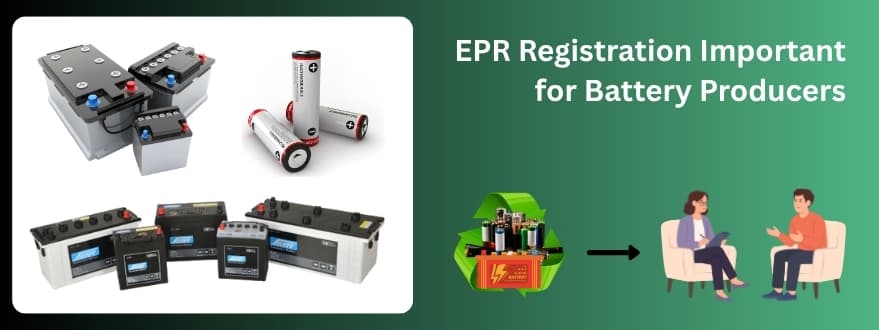
In India, battery waste is substantially increasing every year due to the rising use of electronics, vehicles, and energy storage devices. Improper disposal of used batteries releases toxic chemicals that harm soil, water, as well as severely affect public health. In order to control this pollution, the Government of India has introduced EPR Registration for Battery Waste under the Battery Waste Management (BWM) Rules. Every battery producer, importer, or brand selling batteries must definitely ensure that their batteries are collected, recycled, as well as disposed of in a responsible manner. Getting an EPR Authorization for used batteries is not only a legal requirement but also an environmental responsibility.
Let us delve deeper to explore and understand through this blog what an EPR Authorization for batteries is, and what is the need to obtain the same for battery producers dealing in the Indian market.
What is EPR for Battery Waste?
- Extended Producer Responsibility (EPR) for battery waste means that the producer is accountable for managing batteries after consumers use and discard them.
- This includes collecting used batteries, sending them to authorized recyclers, maintaining records, and ensuring safe recycling, in order to prevent pollution and related hazards.
- The EPR Certification for dry batteries and rechargeable batteries makes sure that producers take part in minimizing pollution as well as promoting circular recycling.
- The authorization is mainly issued by the Central Pollution Control Board (CPCB) and is mandatory for business compliance under the Battery Waste Management (BWM) Rules.
Who Needs EPR Registration for Batteries?
According to the Battery Waste Management Rules, 2022, the following entities must obtain EPR Battery Waste Registration:
| Entity Type | Description |
| Producers | Any company manufacturing or selling batteries under its brand name. |
| Importers | Businesses that are importing batteries or battery-operated devices. |
| Brand Owners (BOs) | Companies selling batteries under their brand (even if manufacturing is outsourced). |
| Online Sellers | Platforms placing batteries on the market (Producers, Importers, Brand Owners, and Online Marketplaces). |
Therefore, PIBOs must obtain EPR in India for batteries before selling them to consumers.
Why Battery Producers Require EPR Authorization in India?
Legal Requirement
Battery EPR is a mandatory compliance requirement under government regulations. Without an EPR Registration Certificate, companies may face penalties, cancellation of business licenses, or trading restrictions.
Environmental Protection
Batteries contain several harmful substances such as lead, lithium, mercury, and cadmium. EPR ensures safe collection and recycling in order to avoid environmental pollution.
Responsible Business Reputation
Having an EPR Battery Certificate helps brands showcase responsible as well as sustainable practices, improving brand value and trust among customers.
Supports Circular Recycling
EPR promotes the reuse of recovered metals and also reduces the need for mining fresh raw materials.
Smooth Market Operations
Many corporate buyers and distributors now require suppliers to have a valid EPR Authorization in India in order to avoid compliance issues in the supply chain.
How to Apply for EPR Certification for Battery Waste?
The process involves multiple compliance steps, which battery producers must be aware of and follow, to obtain the EPR registration certificate for batteries in a convenient manner:
Register Online on the CPCB EPR Portal
Submit the application form with supporting documents.
- Prepare Business Documents
- GST Certificate
- PAN Card
- Product details (battery categories)
- Business registration details
Submit Annual Returns and Compliance Reports
Keep complete records of quantities sold, collected, and recycled.
Fee Payment
Pay the applicable fees to the CPCB authorities.
Review and Grant of EPR
The CPCB will review the submitted application and documents, and on verifying the authenticity of the same, the EPR Authorization for Batteries will be granted.
Need a complete checklist of important documents to prepare beforehand?
Read: Complete EPR Documents for Battery Waste
Brand Liaison: Assisting Battery Producers with Seamless EPR Compliance
Brand Liaison is a recognized EPR Registration Agent in India, helping companies obtain and manage EPR Authorization for used batteries smoothly and efficiently. Having served the industry for more than a decade, we are well aware of the technicalities and formal requirements for obtaining an EPR Registration certificate for battery waste in India.
Here’s what we assist with:
- Documentation and portal registration.
- Preparing collection and recycling plans.
- Smooth liaison with authorized recyclers.
- Filing compliance & annual returns.
- Ensuring renewal and ongoing compliance support.
With expert assistance from the team of professionals from Brand Liaison, a trusted and top-rated EPR Certificate consultant in India for battery waste, battery producers aiming to function smoothly without any worries in the Indian market can very easily avoid delays, rejection, and non-compliance penalties.
Conclusion
EPR for Battery Waste Registration is not only a regulatory requirement but also an important step toward safeguarding the environment. Battery producers, importers, as well as brand owners must definitely obtain EPR Authorization in India in order to legally sell batteries and responsibly manage their end-of-life disposal. Partnering with a professional EPR consultant such as Brand Liaison ensures smooth compliance, hassle-free documentation, and seamless regulatory approvals. Get in touch with our team of expert consultants today, and start your journey with worry-free compliance management in the Indian economy.









Share Your Views
Add a Comment