For Indian Market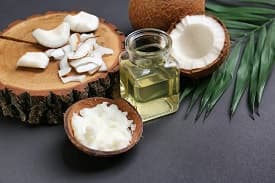
Coconut Fatty Acids - Withdrawn
Product category :
Chemicals, Fertilizers, Polymers & Textiles
Applicable Compliances :
%20Certification.webp&w=96&q=75)
Check Your Eligibility 
See how much effort you'll need for your certification journey.
Download GuideBook
Get the knowledge about the process , required documents & timelines about the certifications
BIS ISI Mark Certification for Coconut Fatty Acids - Withdrawn
Coconut Fatty Acids
Coconut fatty acids are a group of fatty acids derived from coconut oil, a versatile and widely used vegetable oil extracted from the kernel or meat of mature coconuts. These fatty acids are obtained through processes such as cold pressing or solvent extraction of dried coconut kernels. Coconut fatty acids have extensive applications in various industries, including food, cosmetics, pharmaceuticals, and household products. In the food industry, they are used as ingredients in cooking oils, margarines, and confectionery products due to their stability and flavor. These are also valued in the cosmetics industry for their moisturizing and emollient properties, making them common ingredients in skincare products such as lotions, creams, and soaps. Moreover, these fatty acids serve as raw materials for the production of surfactants, detergents, and lubricants due to their excellent cleansing and foaming properties.
Key Highlights
| Product name | Coconut Fatty Acids - Withdrawn |
| Applicable certification | BIS Certification |
| Applicable Indian Standard | IS 12069: 2023 |
| Compliance Requirement | Mandatory |
| QCO for IS 12069: 2023 | Click here |
| Certificate issued by the Ministry | Ministry of Chemicals and Fertilizers |
What is the Required Certification for Coconut Fatty Acids to Sell in India?
BIS ISI Certification
As the use and demand for these products are surging, it is important for businesses dealing with these coconut fatty acids to abide by the market compliance and follow the specifications of the IS 12069: 2023. There are strict standards and benchmarks for Coconut Fatty Acids that the manufacturers and importers must adhere to. Therefore, conforming to the specified IS and obtaining a BIS certificate, mandatory for Coconut Fatty Acids to sell in India, is an essential requirement.
What will happen if you sell or import coconut fatty acids in India without a valid BIS registration? Read here in complete detail.
How to get the Certification for Coconut Fatty Acids in India?
Documents for an ISI Mark License for Coconut Fatty Acids
Here is a list of documents that must be well-read by manufacturers, importers, and sellers in the Indian market:

- Legal address proofs of the factories
- Product specification
- Details of raw material, machinery, and testing equipments
- Details of QC Staff and other basic details of the factory
- Lab test reports of the product
- Main Application Form V
- ISI Application Fee
- Appointment of AIR (Authorized Indian Representative) in case you are a foreign manufacturer
Process for BIS Certification for Coconut Fatty Acids
Here is a detailed step-by-step procedure by which manufacturers and importers can easily gain their BIS certificate. However, it is important to note that the process is different for foreign manufacturers than the BIS process for domestic producers and businesses:

- Prepare Documents
- Submit Application
- Factory Inspections by BIS Officials
- Product Testing
Certification Guidelines For Indian Manufacturers
- Must have proper manufacturing and testing capabilities for the product.
- Apply through the BIS Manak portal with all required documents.
- Product samples are tested in a BIS-accredited lab.
- License is granted if test results and documents meet the Indian standards set by the Bureau of Indian Standards.
Certification Guidelines For Foreign Manufacturers
- Must appoint an Authorized Indian Representative (AIR) as per BIS guidelines.
- Submit application with Factory Test Report (FTR).
- BIS conducts factory inspection and selects samples for testing.
- A license is issued after successful testing and compliance with standards.
Need complete knowledge about the certification? Click to view the complete guidebook for an ISI Mark registration.
Certification Guidelines For Indian Importers
- Not eligible to apply directly; only manufacturers can obtain BIS ISI registration.
- Must coordinate with the manufacturer to get the certificate.
- Keep a copy of the license to avoid customs issues.
- Can act as AIR if authorized by the manufacturer.
Certification Guidelines For Traders
- Cannot apply for BIS ISI registration directly.
- The certificate must be obtained by the manufacturer.
- Maintain a copy of the license for compliance.
- Can act as AIR if authorized.
Certification Guidelines For Online Sellers
- Not eligible to apply directly; only original manufacturers can apply.
- Must obtain the BIS ISI certificate copy from the manufacturer.
- Required to present the license for e-commerce compliance.
Visit here to check your eligibility for Coconut Fatty Acids for the Indian market now!
Brand Liaison: Assisting Businesses with Seamless Compliance
Brand Liaison, being a top ISI mark registration consultant, is serving the industry with its many features. Here’s how we help businesses in seamlessly managing compliance in the Indian market:
- Tailored solutions for businesses
- Cost-effective compliance management
- Fast processing of your application
- Simplified procedures and documents for BIS
- Expert guidance with years of experience
Stay compliant and ahead in the Indian market as Brand Liaison’s team of expert consultants is here to ensure that your business is able to manage market compliance with ease and efficiency.
Source of Data Insights for BIS ISI Mark :- https://www.bis.gov.in/product-certification/products-under-compulsory-certification/scheme-i-mark-scheme/?lang=en
FAQs
What is the IS code for Coconut Fatty Acids?
What is the cost of obtaining a BIS Certification for Coconut Fatty Acids?
What is the validity of a BIS license for Coconut Fatty Acids?
What is the timeline for getting a BIS certificate for Coconut Fatty Acids for Indian producers?
Can I sell Coconut Fatty Acids without a BIS license in the Indian market?
Relevant notifications
Check Your Eligibility
See how much effort you'll need for your certification journey.
Download GuideBook
Get the knowledge about the process , required documents & timelines about the certifications
%20Certification.webp&w=256&q=75)
Testimonials
What our client says

Brand Liaison is a trusted partner for all our certification needs. Their expert team made the complicated compliance process simple and stress-free. Professional, reliable, and highly efficient.

Sylvester Adams

Our experience with Brand Liaison has been outstanding. From start to finish, their consultants managed everything with precision. The professionalism and expertise of their team are truly commendable.

Pratibha Mukhija

Brand Liaison has an excellent team of experts who know the compliance field inside out. Their commitment, transparency, and professional service make them stand out from others.

Ashish Banerjee

We were struggling with BIS certification until we connected with Brand Liaison. Their knowledgeable team guided us with accuracy and patience. Excellent service and very professional staff.

Christina Gomez

The expertise of Brand Liaison’s consultants is evident in how quickly and efficiently they work. They saved us time, effort, and unnecessary stress. Highly recommended for compliance services.

Varun Shukla

What impressed us most about Brand Liaison is their professional approach and in-depth knowledge. The team is always available to answer queries and provide reliable guidance throughout the process.

Sanchi Gupta

We trusted Brand Liaison with our BEE certification, and they delivered perfectly. Their expert handling of documentation and testing was seamless. A great team with unmatched professionalism.

George Jacob

Brand Liaison made the entire certification process smooth and simple. Their team explained every step clearly and handled all requirements with complete professionalism. Truly experts in their field.