For Indian Market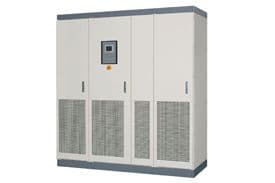
Utility-Interconnected Photovoltaic Inverters
Product category :
Electronic & IT Goods
Applicable Compliances :

Check Your Eligibility 
See how much effort you'll need for your certification journey.
Download GuideBook
Get the knowledge about the process , required documents & timelines about the certifications
BIS CRS Registration for Utility-Interconnected Photovoltaic Inverters
Utility-Interconnected PV Inverters for the Indian Market: An Insight
As power backup options become a common necessity these days, the use of appliances such as utility-interconnected photovoltaic inverters is increasing. This plays a crucial role in converting the direct current (DC) from solar panels into alternating current (AC). Suitable and very helpful in providing consistent power in homes or large electrical grids. These inverters can efficiently work in conjunction with the existing utility grid. Moreover, when these products are compliant with the necessary product certifications in the Indian market, such as a BIS CRS license, it makes them a smart choice for sustainable and uninterrupted power management.
Key Highlights
| Product name | Utility-Interconnected Photovoltaic Inverters |
| Applicable certification | BIS CRS Registration |
| Applicable Indian Standard | IS 16221 (Part 2): 2015 & IS 16169: 2014 |
| Compliance Requirement | Mandatory |
| QCO for IS 16221 (Part 2): 2015 & IS 16169: 2014 | Click here |
| Certificate issued by the Ministry | Ministry of New and Renewable Energy (MNRE) |
What is the Required Certification for Utility-Interconnected PV Inverters to sell in India?
In India, Utility-Interconnected Photovoltaic Inverters cannot be sold without BIS CRS Registration. Let’s explore the required process, documentation, and compliance norms that must be followed by businesses.
BIS CRS Registration Certificate
BIS registration is mandatory for Utility-Interconnected Photovoltaic (PV) Inverters as it ensures compliance with essential safety, quality, and performance standards set by the Bureau of Indian Standards. This registration protects consumers and utility infrastructure from electrical hazards, grid instability, and product malfunctions. It also ensures that only reliable and tested inverters are installed in India’s solar energy systems, supporting the growth of a secure and efficient renewable energy ecosystem. Therefore, conformance with IS 16221 (Part 2): 2015 & IS 16169: 2014 and obtaining a BIS CRS registration, mandatory for Utility-Interconnected Photovoltaic Inverters to sell in India, is an essential requirement for businesses.
What will happen if you are selling without a BIS CRS license? Read here.
How to Get BIS Registration for Utility-Interconnected PV Inverters in India?
Documents for BIS Registration for Utility-Interconnected Photovoltaic Inverters
The Bureau of Indian Standards (BIS) has prescribed a list of documents that must be well-read and understood by applicants. These documents listed by the BIS must be prepared by manufacturers, importers, and sellers on time to prevent last-minute hassles and gain certifications easily and conveniently:

- Trademark / Brand Registration Certificate
- Factory Address Proof
- Product Test Report (BIS-approved lab)
- PCB Layout & Critical Component List (CCL)
- Product User Manual
- AIR Appointment Letter (for foreign manufacturers)
Process for CRS License for Utility-Interconnected Photovoltaic Inverters
The Bureau of Indian Standards (BIS) has prescribed a dedicated format by which manufacturers and importers of all IT and Electronic products can easily apply for and gain a BIS registration. Have a look at the detailed process of acquiring a BIS CRS License:

- Prepare Documents
- Test Product
- Apply Online
- Grant of BIS CRS Registration
Certification Guidelines For Indian Manufacturers
- Ensure the product is under the BIS CRS Mandatory List and tested by a BIS-recognized lab.
- Prepare required documents and use the R-Number mark only after approval.
- Professional assistance can help simplify the process.
Certification Guidelines For Foreign Manufacturers
- Appoint an Authorized Indian Representative (AIR) as required by BIS.
- Get product testing done in a BIS-recognized lab in India and prepare documents.
- Submit the application through AIR for approval.
Need complete knowledge about the certification? Click to view the complete guidebook for a BIS Registration.
Certification Guidelines For Indian Importers
- Importers cannot apply directly; only manufacturers are eligible for BIS CRS.
- Obtain and maintain the BIS license copy from the manufacturer.
- Can act as AIR if authorized by the manufacturer.
Certification Guidelines For Traders/Distributors
- Not eligible to apply directly; certification must be done by the manufacturer.
- Keep a copy of the BIS license for compliance.
- Can act as AIR if authorized.
Certification Guidelines For Online Sellers
- Not eligible to apply directly; certification must be done by the manufacturer.
- Obtain a BIS license copy from the manufacturer for compliance.
- Ensure certification before listing products online.
Brand Liaison: Simplifying Complex Compliance Procedures
Brand Liaison offers the best compliance management services through its many features and years of professional experience. Be it professional guidance or quick approvals, we offer them all. Here’s why Brand Liaison is the best BIS registration consultant for businesses:
- Expert consultancy
- Professional guidance
- Cost-effective solutions
- Tailored compliance for businesses
- Quicker results and faster processing
Get in touch with the best BIS consultants like us, and we will help your business meet the necessary market compliance in the Indian market. Contact us today if you need some expert advice and comprehensive support for the Indian market compliance requirements.
Source of Data Insights for BIS CRS :- https://www.crsbis.in/BIS/products-bis.do
FAQs
What is the IS code for Utility-Interconnected Photovoltaic Inverters?
Can I manufacture Utility-Interconnected Photovoltaic Inverters without a BIS CRS?
What is the validity of a BIS registration for Utility-Interconnected Photovoltaic Inverters?
What is the cost of a BIS CRS license for Utility-Interconnected Photovoltaic Inverters?
What is the estimated timeline to obtain a BIS registration for Utility-Interconnected Photovoltaic Inverters?
Relevant notifications
| Title | Date of issue |
| MNRE extends BIS Exemption for Small Solar Module Manufacturers | 2020-10-26 |
Check Your Eligibility
See how much effort you'll need for your certification journey.
Download GuideBook
Get the knowledge about the process , required documents & timelines about the certifications

Testimonials
What our client says

Brand Liaison is a trusted partner for all our certification needs. Their expert team made the complicated compliance process simple and stress-free. Professional, reliable, and highly efficient.

Sylvester Adams

Our experience with Brand Liaison has been outstanding. From start to finish, their consultants managed everything with precision. The professionalism and expertise of their team are truly commendable.

Pratibha Mukhija

Brand Liaison has an excellent team of experts who know the compliance field inside out. Their commitment, transparency, and professional service make them stand out from others.

Ashish Banerjee

We were struggling with BIS certification until we connected with Brand Liaison. Their knowledgeable team guided us with accuracy and patience. Excellent service and very professional staff.

Christina Gomez

The expertise of Brand Liaison’s consultants is evident in how quickly and efficiently they work. They saved us time, effort, and unnecessary stress. Highly recommended for compliance services.

Varun Shukla

What impressed us most about Brand Liaison is their professional approach and in-depth knowledge. The team is always available to answer queries and provide reliable guidance throughout the process.

Sanchi Gupta

We trusted Brand Liaison with our BEE certification, and they delivered perfectly. Their expert handling of documentation and testing was seamless. A great team with unmatched professionalism.

George Jacob

Brand Liaison made the entire certification process smooth and simple. Their team explained every step clearly and handled all requirements with complete professionalism. Truly experts in their field.