For Indian Market
Rigid Package Plastic
Product category :
Plastic Packaging Category I
Applicable Compliances :

Check Your Eligibility 
See how much effort you'll need for your certification journey.
Download GuideBook
Get the knowledge about the process , required documents & timelines about the certifications
EPR Certification for Rigid Package Plastic
Rigid Package Plastic for the Indian Market: An Insight
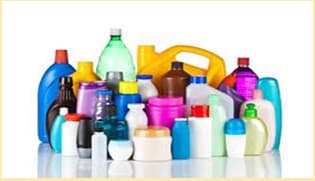
Rigid Plastic Packaging, commonly known as "rigid" in the industry, is predominantly manufactured from High-Density Polyethylene (HDPE) or Polypropylene (PP). These products include containers that usually lack open tops and instead feature separate closures, lids, or covers. These rigid plastic packages are often used for packing various consumer goods, including beverages, personal care products, and food items. However, as plastics potentially become dangerous waste, the need to register for Extended Producer Responsibility (EPR) is very important. Let us understand why an EPR certificate for rigid plastic packaging that comes under category I of the plastic packaging category is important. This certification ensures producers take responsibility for post-consumer waste, promoting recycling, reducing landfill burden, and supporting a circular economy approach.
Key Highlights
| Product name | Rigid Package Plastic |
| Applicable certification | EPR Registration for Plastic Waste |
| Applicable Category | Plastic packaging category I |
| Compliance Requirement | Mandatory |
| Certificate issued by the Ministry | The Ministry of Environment, Forest and Climate Change (MoEF&CC) |
What is the required certification for Rigid Package Plastic in India?
For Rigid Package Plastic, an EPR Registration for plastics is a prerequisite for Indian market sales. Here’s a detailed look at the certification steps, documents, as well as mandatory requirements.
EPR Certification for Plastics
An EPR certification is required for producers, importers, brand owners, and plastic waste processors involved in plastic packaging products. Hard, HDPE or PP plastic packaging is commonly used in all industries, including food and beverages, personal care, and household. Nevertheless, this has degraded the environmental situation because of its poor handling. An EPR registration makes sure that enterprises bear the responsibility for gathering, recycling, and properly disposing of plastic waste. Therefore, compliance with the specifications of the EEE code and getting an EPR certificate, mandatory for rigid package plastic to sell in India, is an integral requirement for the Indian market.
What happens if you sell or import these in India without an EPR certification for plastics? Read here.
How to Obtain EPR Registration for Rigid Package Plastic in India?
Documents for an EPR Registration for Rigid Package Plastic
The CPCB-specified documents and details must be carefully taken care of by all applicants seeking EPR (Extended Producer Responsibility) certification for plastic waste management in India. Here is a list of documents required for EPR registration:

- Basic documents related to the Firm / Company
- Details of the authorised signatory
- Category details and specifications
- Plans and flowcharts for the collection and recycling of Plastics
- CTE/CTO consents, Agreement copies with dealers, recyclers, collection centres, disposal facilities, etc.
Process to get an EPR Certificate for Rigid Package Plastic
There is a structural framework outlined by the Central Pollution Control Board (CPCB). Here is a detailed guide to obtaining an EPR certificate for plastic waste management without facing any hassles:

- Prepare documents
- Submit application
- Review and verification
- Grant of Certification
Certification Guidelines For Importers
- Must register on the Central Pollution Control Board EPR portal before importing.
- Provide accurate details of plastic packaging and ensure EPR compliance.
- Work with authorized recyclers and submit annual returns.
Certification Guidelines For Producers
- Must register on the CPCB EPR portal before manufacturing or selling.
- Obtain EPR certification and meet recycling targets.
- Use CPCB-approved recyclers and file annual compliance reports.
Need complete knowledge about the certification? Click to view the complete guidebook for an EPR Registration.
Certification Guidelines For Brand Owners
- Mandatory registration on the CPCB portal before selling packaged products.
- Ensure proper plastic waste management and obtain EPR certification.
- Maintain records and submit annual returns.
Certification Guidelines For Plastic Waste Processors (PWPs)
- Must have CPCB/SPCB authorization and EPR registration.
- Follow Plastic Waste Management Rules for recycling.
- Issue recycling certificates and submit annual compliance reports.
Visit here to check your eligibility for the Rigid Package Plastic for the Indian market now!
How Does Brand Liaison Assist Businesses in Obtaining Seamless Compliance?
- Acts as a trusted consultant, guiding businesses through the entire EPR Registration for plastic waste process
- Offers end-to-end EPR Registration for plastic waste services, from documentation to final approval
- Helps prepare and submit accurate applications to avoid delays and rejections
- Liaises with officials on behalf of clients to ensure smooth communication and faster processing
- Offers personalized EPR Registration for plastic waste tailored to product type and industry
- Ensures cost-effective and time-efficient certification for manufacturers and importers
Contact Brand Liaison for convenient assistance, as we are top EPR plastic waste authorization consultants, known to serve the compliance management industry for more than a decade now.
Source of Data Insights for EPR Plastic :- https://eprplastic.cpcb.gov.in/#/plastic/home/categoriesepr
FAQs
Is EPR certification mandatory for selling rigid package plastic in India?
What is the timeline to get EPR certification for rigid plastic packaging?
What is the validity of the EPR certification for rigid package plastic?
Can I sell rigid plastic packaging without EPR registration?
Check Your Eligibility
See how much effort you'll need for your certification journey.
Download GuideBook
Get the knowledge about the process , required documents & timelines about the certifications
Testimonials
What our client says

Brand Liaison is a trusted partner for all our certification needs. Their expert team made the complicated compliance process simple and stress-free. Professional, reliable, and highly efficient.

Sylvester Adams

Our experience with Brand Liaison has been outstanding. From start to finish, their consultants managed everything with precision. The professionalism and expertise of their team are truly commendable.

Pratibha Mukhija

Brand Liaison has an excellent team of experts who know the compliance field inside out. Their commitment, transparency, and professional service make them stand out from others.

Ashish Banerjee

We were struggling with BIS certification until we connected with Brand Liaison. Their knowledgeable team guided us with accuracy and patience. Excellent service and very professional staff.

Christina Gomez

The expertise of Brand Liaison’s consultants is evident in how quickly and efficiently they work. They saved us time, effort, and unnecessary stress. Highly recommended for compliance services.

Varun Shukla

What impressed us most about Brand Liaison is their professional approach and in-depth knowledge. The team is always available to answer queries and provide reliable guidance throughout the process.

Sanchi Gupta

We trusted Brand Liaison with our BEE certification, and they delivered perfectly. Their expert handling of documentation and testing was seamless. A great team with unmatched professionalism.

George Jacob

Brand Liaison made the entire certification process smooth and simple. Their team explained every step clearly and handled all requirements with complete professionalism. Truly experts in their field.