 For Indian Market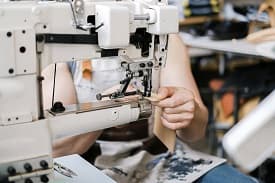
Appliances used for sewing, knitting, weaving
Product category :
Electrical and Electronic Equipment
Applicable Compliances :
.webp&w=96&q=75)
Check Your Eligibility 
See how much effort you'll need for your certification journey.
Download GuideBook
Get the knowledge about the process , required documents & timelines about the certifications
Technical Name
Appliances used for sewing, knitting, weaving and other processing for textiles
EPR Certification for Electronics for Appliances used for sewing, knitting, and weaving
Appliances used for sewing and weaving for the Indian Market: An Insight
Sewing machines, knitting machines, weaving machines, and other machines in the textile industry are vital to the textile industry and house-based craft development. Simple and highly computerized sewing machines are all designed to stitch the fabrics that are to be merged, and a simple machine has simple features, like stitches that can be completed. From small tailoring shops to home businesses in India, sewing, knitting, and weaving appliances keep seeing regular buying, contributing around 6–8% of light machinery demand and growing at nearly 5–6% each year as users upgrade to approved and easy-to-use machines. Therefore, it is essential to conform to the mandatory EPR registration certificate to be eligible for sales in the market.
Key Highlights
| Product name | Appliances used for sewing, knitting, and weaving |
| Applicable certification | EPR Certification for Electronics |
| Applicable Category | LSEEW19 |
| Compliance requirement | Mandatory |
| Certificate issued by the Ministry | Ministry of Environment, Forest, and Climate Change (MoEF&CC) |
What are the Required Certifications for Appliances used for sewing and weaving to sell in India?
For Appliances used for sewing, knitting, and weaving, EPR Certification for electronics is a prerequisite for Indian market sales. Here’s a detailed look at the certification steps, documents, as well as mandatory requirements.
EPR Certification for Electronics
Extended Producer Responsibility (EPR) is a compliance regulation that is required in the strict atmosphere of the Indian market with an aim to minimize electronic waste. The EPR registration certificate will guarantee that the products are also within the sustainability standards, in addition to applying the regulations of the market. When manufacturers and importers of sewing, knit, and weaving appliances acquire EPR authorization, they will thus ensure that they assume the responsibility of recovering, recycling, and disposing of end products safely. EPR certification, mandatory for Appliances used for sewing, knitting, and weaving to sell in India, ensures compliance with Indian e-waste management regulations. Moreover, it helps in conforming to the LSEEW19 for such products.
What will happen if you sell sewing, weaving, and knitting appliances without having an EPR certificate in the Indian market? Read here in complete detail.
How to get EPR Certification for Appliances used for sewing and weaving in the Indian market?
Documents for EPR registration for Appliances used for sewing, knitting, and weaving
Before undertaking the EPR Authorization process, manufacturers and importers must compile certain documents to comply with Indian environmental regulations. This can only be achieved by properly prepared documentation that will have the least chances of being rejected or delayed, thus an efficient flow of applications:

- Basic documents related to the Firm / Company
- Details of the authorised signatory
- Product details and specifications
- Plans and flowcharts for the collection and recycling of Electronics
- CTE/CTO consents, Agreement copies
Process for EPR Certification for Appliances used for sewing, knitting, and weaving
The process shown below is a step-by-step guide on how to become EPR Authorized for E-waste. By adhering to every step in the EPR Authorization procedure, a company will stimulate the reliability of its products, credibility within the market, and consumer confidence:

- Prepare documents
- Submit application
- Review and verification
- Grant of Certification
Certification Guidelines for Producer (Importers)
- Must obtain mandatory EPR registration from the Central Pollution Control Board before selling or importing products.
- Fulfill e-waste collection and recycling targets as per CPCB norms.
- Ensure compliance through authorized recyclers and maintain records with annual return filing.
Certification Guidelines for Recycler
- Must have authorization from CPCB/SPCB to operate.
- Follow E-Waste Management Rules and CPCB guidelines for recycling.
- Issue recycling certificates and maintain records with annual returns.
Need complete knowledge about the certification? Click to view the complete guidebook for an EPR Registration.
Certification Guidelines for Refurbisher
- Registration and authorization from CPCB/SPCB are mandatory.
- Carry out refurbishing as per E-Waste Management Rules and CPCB guidelines.
- Maintain records and file annual returns on the CPCB portal.
Certification Guidelines for Manufacturer
- EPR registration on the CPCB portal is mandatory before manufacturing.
- Meet e-waste collection and recycling targets set by CPCB.
- Ensure compliance through authorized recyclers and maintain records with annual filings.
How Brand Liaison Assists Businesses in Obtaining Seamless Compliance
- Acts as a trusted consultant, guiding businesses through the entire EPR Authorization process
- Offers end-to-end EPR Authorization services, from documentation to final approval
- Helps prepare and submit accurate applications to avoid delays and rejections
- Liaises with officials on behalf of clients to ensure smooth communication and faster processing
- Offers a personalized EPR Authorizationprocess tailored to product type and industry
- Ensures cost-effective and time-efficient certification for manufacturers and importers
Get in touch with the team of professional experts who operate in Brand Liaison and begin to make your products compliant with the Indian market. Keep in mind, we are only a call away!
Source of Data Insights for EPR Electronic :- https://eprewaste.cpcb.gov.in/#/notified
FAQs
What is the EPR category for sewing, knitting, and weaving appliances?
Is EPR authorization mandatory for selling these appliances in India?
How long is the EPR registration valid?
What are the fines for selling without EPR?
Check Your Eligibility
See how much effort you'll need for your certification journey.
Download GuideBook
Get the knowledge about the process , required documents & timelines about the certifications
.webp&w=256&q=75)
Testimonials
What our client says

Brand Liaison is a trusted partner for all our certification needs. Their expert team made the complicated compliance process simple and stress-free. Professional, reliable, and highly efficient.

Sylvester Adams

Our experience with Brand Liaison has been outstanding. From start to finish, their consultants managed everything with precision. The professionalism and expertise of their team are truly commendable.

Pratibha Mukhija

Brand Liaison has an excellent team of experts who know the compliance field inside out. Their commitment, transparency, and professional service make them stand out from others.

Ashish Banerjee

We were struggling with BIS certification until we connected with Brand Liaison. Their knowledgeable team guided us with accuracy and patience. Excellent service and very professional staff.

Christina Gomez

The expertise of Brand Liaison’s consultants is evident in how quickly and efficiently they work. They saved us time, effort, and unnecessary stress. Highly recommended for compliance services.

Varun Shukla

What impressed us most about Brand Liaison is their professional approach and in-depth knowledge. The team is always available to answer queries and provide reliable guidance throughout the process.

Sanchi Gupta

We trusted Brand Liaison with our BEE certification, and they delivered perfectly. Their expert handling of documentation and testing was seamless. A great team with unmatched professionalism.

George Jacob

Brand Liaison made the entire certification process smooth and simple. Their team explained every step clearly and handled all requirements with complete professionalism. Truly experts in their field.








